






Phone:
0086 28 87573647
+86 19150187139

1. Intermittent Ion Exchange: This method involves mixing ion exchange resin with the raw water to be treated and stirring appropriately until an exchange equilibrium is reached, ensuring the water quality meets design requirements. This method is typically used for small-scale production or experiments.
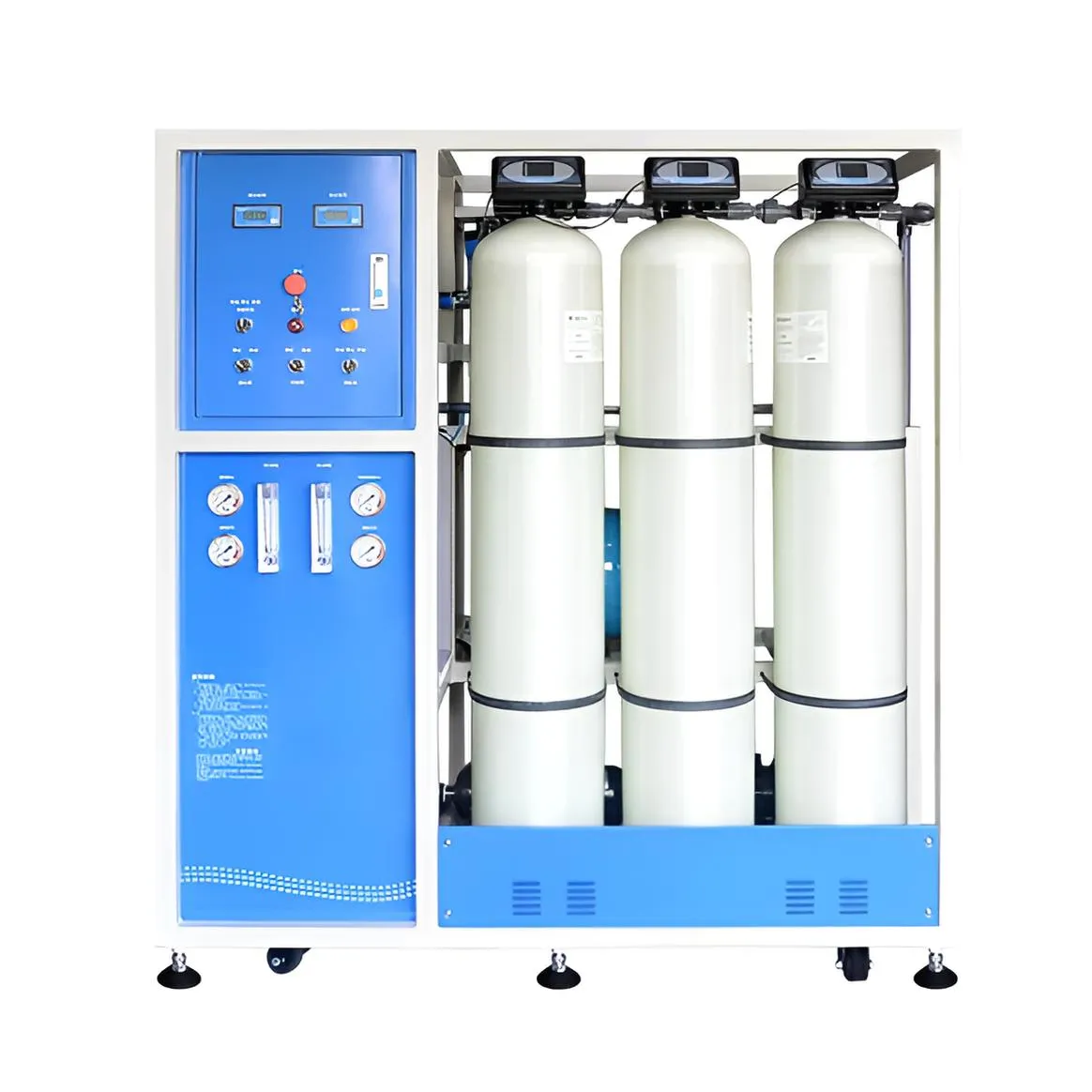
2. Fixed Bed Ion Exchange: This is a commonly used ion exchange method. Ion exchange resin is placed inside an exchange column, and the raw water to be treated flows through the resin bed at a certain flow rate to achieve the exchange purpose. This method has simple equipment, is easy to operate, and is suitable for production of various scales. However, its resin utilization rate is relatively low, and regeneration costs are high.
3. Continuous Moving Bed Ion Exchange: This method involves completing the resin exchange, regeneration, and cleaning processes in separate devices. The saturated resin is discharged from the bottom of the exchange column to a regeneration column for regeneration. The regenerated resin is then added back to the top of the exchange column to replenish it. This is a semi-continuous operation. Continuous moving bed ion exchange has high resin utilization and low regenerant consumption. However, due to the addition of auxiliary equipment such as the regeneration column, the investment is larger, and operation and management are more complex. It is suitable for large-scale production.
4. Fully Continuous Moving Bed Ion Exchange: In this operation, the resin, treated raw water, regenerated solution, and wash water are all in a continuous flow state. The resin is in a boiling state, and exchange, regeneration, and cleaning occur continuously in different parts of the equipment, making it a fully continuous operation. Continuous moving bed ion exchange is highly efficient, has a small device size, high resin utilization, low investment, low regenerator consumption, and is easy to manage. Its disadvantages include high requirements for design and operation, and relatively high resin loss.
This article is exclusively provided online by Sichuan Youpu Ultrapure Technology Co., Ltd. Reproduction without permission is prohibited!





