







Phone:
0086 28 87573647
+86 19150187139

In scientific research and industrial production, the purity and stability of water are crucial factors, especially in laboratory environments. Pure water and ultrapure water are core components of experimental water, and their pH values directly affect the accuracy and reliability of experimental results. This article will delve into the characteristics, differences, measurement methods, and applications of laboratory pure water and ultrapure water in terms of pH value.
Water refers to water that has undergone a series of treatment processes to remove impurities, suspended solids, organic matter, and most inorganic ions. In most cases, the pH value of pure water is set to near neutral 7, because a neutral pH value is neither acidic nor alkaline, meeting the needs of most scientific experiments and industrial production. However, it is worth noting that the pH value of pure water is not constant; it may fluctuate slightly due to environmental temperature, storage conditions, and trace amounts of residual substances in the water.
Laboratory water purity levels are typically divided into multiple grades, such as Grade I, Grade II, and Grade III. According to the "Specifications and Test Methods for Water Used in Analytical Laboratories" (GB/T6682-2008), the pH range of Grade III pure water is 5.0-7.5 at 25℃. However, for Grade I and Grade II water, which have even higher purity, their actual pH value is difficult to measure directly due to their extremely high purity; therefore, no specific pH standard range has been set.
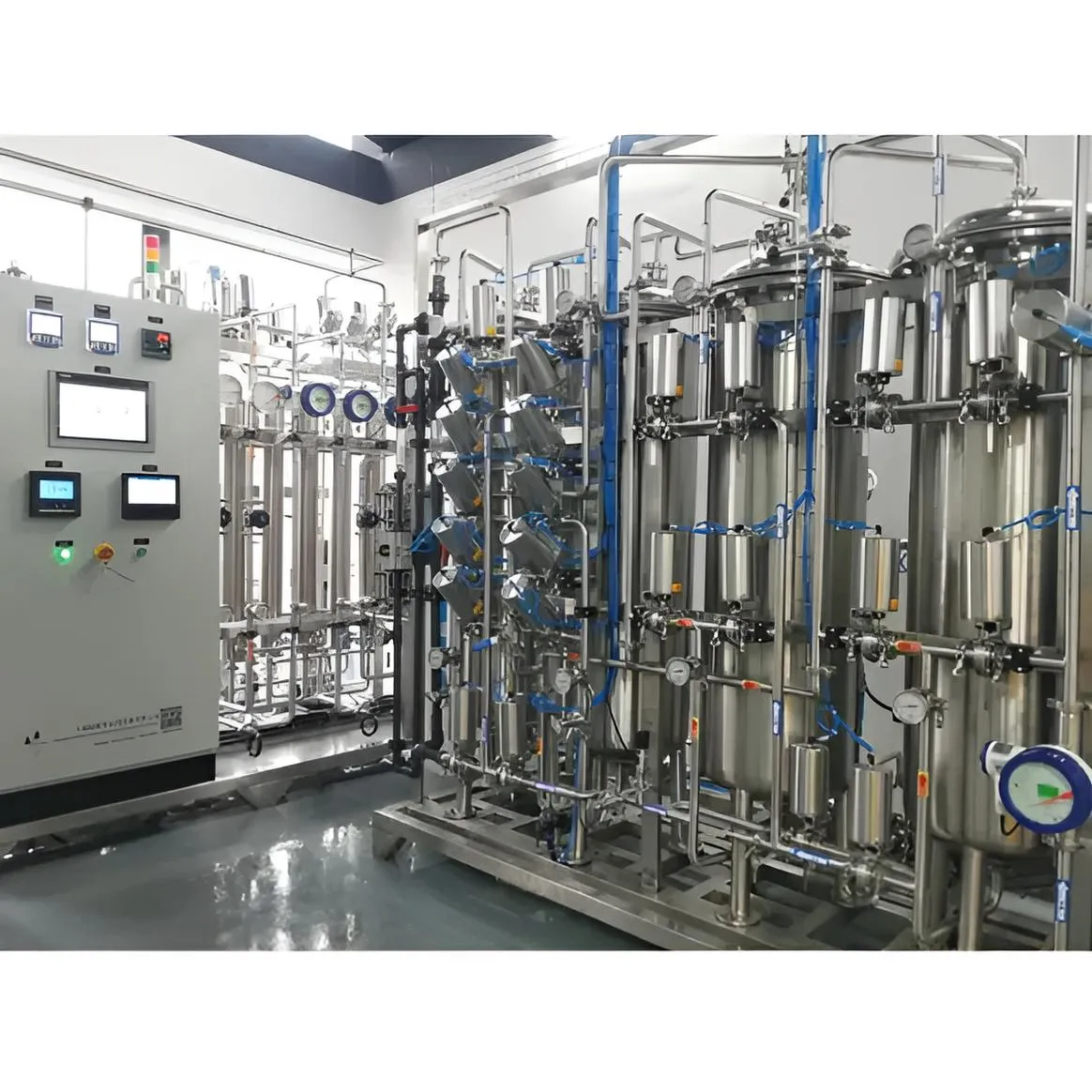
Ultrapure water, as a further upgrade to pure water, is treated through complex processes such as multi-stage distillation, reverse osmosis, ion exchange, ultraviolet disinfection, and microfiltration to remove almost all trace organic matter, dissolved gases, and ions, achieving extremely high purity. Its pH value is also strictly controlled, but compared to pure water, pH management of ultrapure water is more complex because any small change can significantly affect experimental results.
During the preparation of ultrapure water, a series of measures are usually taken to maintain its pH stability. For example, high-purity chemical reagents and raw materials are used, and the temperature, humidity, and cleanliness of the preparation environment are strictly controlled. Advanced online monitoring and automatic control systems are also employed. Furthermore, special attention is needed during the storage and transportation of ultrapure water to avoid pH changes caused by external contamination.
Various methods exist for determining the pH of pure and ultrapure water in the laboratory, commonly including the glass electrode method, colorimetric method, and spectroscopic method. Among these, the glass electrode method is widely used due to its simplicity and high accuracy. This method utilizes the sensitivity of the glass electrode to hydrogen ion concentration; by measuring the potential difference between the electrode and the solution being tested, the pH value of the solution is calculated.
It is important to note that when measuring the pH of pure and ultrapure water, high-purity reagents and standard buffer solutions must be used to minimize measurement errors. Simultaneously, because pure and ultrapure water have extremely low conductivity and near-zero ion concentration, special attention must be paid to the cleanliness and maintenance of the electrodes during actual operation to avoid the influence of electrode contamination on the measurement results.
Pure water and ultrapure water have wide applications in laboratories, biomedicine, semiconductor manufacturing, optoelectronic devices, and precision instruments. In laboratories, they are essential water sources for reagent preparation, instrument cleaning, and cooling. In the biomedical field, ultrapure water is widely used in drug development, cell culture, and medical device cleaning due to its high purity and sterility. In semiconductor manufacturing and optoelectronic device production, ultrapure water is a key process water source, and its purity and pH stability directly affect product quality and performance.
In conclusion, the pH value of laboratory pure water and ultrapure water is one of the important indicators for measuring their quality. Through rigorous preparation processes and precise measurement methods, the optimal performance of pure and ultrapure water in various applications can be ensured. At the same time, we should also pay attention to energy consumption and wastewater treatment issues in the water preparation process, and actively take measures to reduce environmental impact and achieve sustainable development.





