


Phone:
0086 28 87573647
+86 19150187139

Laboratory ultrapure water systems inevitably encounter various malfunctions. This article will detail common malfunction types, causes, and corresponding solutions for laboratory ultrapure water systems, aiming to help laboratory technicians quickly and effectively resolve equipment problems and ensure the smooth operation of experiments.
Decreased water production is one of the most common malfunctions of laboratory ultrapure water systems. There are several possible causes, including pretreatment filter clogging, high-pressure pump failure, and RO membrane clogging.
1. Pretreatment Filter Clogging: The function of the pretreatment filter is to remove large particulate impurities and suspended solids from the water. If it is not replaced or cleaned for a long time, the filter will become clogged, leading to reduced water flow. The solution is to regularly check and replace the pretreatment filter.
2. High-Pressure Pump Failure: The high-pressure pump is the power source of the ultrapure water system, and its performance directly affects the water production. A high-pressure pump failure may manifest as insufficient pressure or no output at all. In this case, it is necessary to check whether the high-pressure pump is damaged or clogged, and clean or replace it.
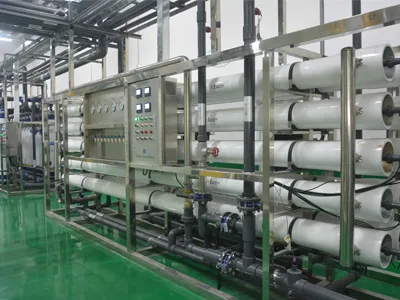
3. RO Membrane Clogging: The RO membrane is the core component of the ultrapure water system, responsible for removing dissolved salts, organic matter, and microorganisms from the water. RO membrane clogging can lead to a significant decrease in water production. Solutions include cleaning the RO membrane or replacing it with a new one.
Substandard water quality typically manifests as the presence of impurities, unusual odors, or excessively high TDS (Total Dissolved Solids) levels. Possible causes include a reduced RO membrane desalination rate.
1. Reduced RO Membrane Desalination Rate: Over time, the desalination rate of the RO membrane gradually decreases. In this case, replacing the RO membrane is necessary to maintain water quality.
2. Leakage: Aging or damage to sealing elements can cause leakage and a decline in water quality. The solution is to replace the sealing elements.
Insufficient pressure usually manifests as the equipment operating normally but the water production rate being far below the rated value. Possible causes include pump damage, insufficient raw water pressure, or a malfunctioning inlet pressure solenoid valve.
1. Pump Damage: The pump is a critical component of the ultrapure water system, and its performance directly affects the equipment's water production and pressure. If the pump is damaged, it needs to be replaced.
2. Insufficient Raw Water Pressure: Low raw water pressure will prevent the ultrapure water system from operating normally. In this case, check if the raw water pressure meets the equipment requirements and take appropriate pressurization measures.
3. Inlet Solenoid Valve Malfunction: The inlet solenoid valve controls the inlet water pressure. If the solenoid valve malfunctions, it will cause insufficient pressure. The solution is to check if the solenoid valve is working properly and repair or replace it.
System leakage is one of the common malfunctions of laboratory ultrapure water systems. Possible causes include leaks at pipe connections, leaks in PE pipe plugs, and leaks in the RO membrane housing.
1. Leaks at Pipe Connections: Leaks at pipe connections are usually caused by poor sealing or loose connections. The solution is to reconnect the pipes and ensure a good seal.
2. Leaks in PE Pipe Plugs: Leaks in PE pipe plugs may be caused by aging or damage to the plug. In this case, replace the PE pipe plug with a new one.
3. Leaks in the RO Membrane Housing: Leaks in the RO membrane housing are usually caused by poor sealing or damage to the membrane housing. The solution to this problem is to check the seal of the RO membrane housing and repair or replace it.
A system not producing water typically manifests as the equipment malfunctioning and not producing pure water. Possible causes include tap water not being turned on, insufficient water pressure, a clogged pretreatment filter, or a damaged low-pressure protection switch.
1. Tap water not turned on or insufficient water pressure: If the tap water is not turned on or the water pressure is insufficient, the equipment will not function properly. In this case, you need to turn on the tap water or increase the water pressure.
2. Clogged pretreatment filter: A clogged pretreatment filter will prevent water from flowing smoothly, thus affecting the equipment's water production capacity. The solution is to replace the pretreatment filter.
3. Damaged low-pressure protection switch: The low-pressure protection switch protects the equipment from damage caused by low-pressure water flow. If the low-pressure protection switch is damaged, the equipment will not function properly. In this case, you need to replace the low-pressure protection switch.
To reduce the occurrence of malfunctions in laboratory ultrapure water systems, the following preventive measures can be taken:
1. Regular Inspection and Maintenance: Regularly clean, disinfect, and inspect the equipment to ensure its hygiene and performance.
2. Replace Filter Cartridges and Consumables: Replace pretreatment filter cartridges, RO membranes, and post-activated carbon filters regularly according to the equipment's operating instructions and actual conditions.
3. Pay Attention to the Operating Environment: The equipment should be placed in a dry, well-ventilated environment free of corrosive gases, avoiding direct sunlight and high temperatures.
4. Timely Repair: If any malfunction or abnormality is found, the machine should be stopped immediately for inspection, and professional repair personnel should be contacted promptly.
Troubleshooting laboratory ultrapure water systems requires comprehensive consideration of multiple factors, involving a step-by-step inspection and repair of each component, from pretreatment filter cartridges and high-pressure pumps to RO membranes. Only through comprehensive and meticulous inspection and repair can the normal operation of the equipment and the accuracy of experimental results be ensured.