





Phone:
0086 28 87573647
+86 19150187139

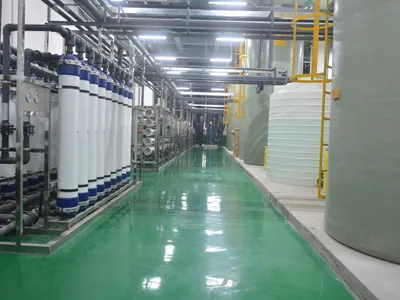
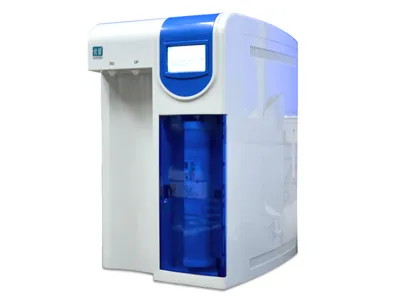
Ultrapure water is required in certain experiments, including atomic spectroscopy, high-performance liquid chromatography, radiochemical analysis, ultrapure substance analysis, and trace substance analysis.
One method is to add a small amount of potassium permanganate to water, perform a double distillation using a glass distillation apparatus, and then distill again using a full quartz still. The resulting water is collected in a quartz container to obtain ultrapure water.
Another method is to use a mixed bed or tandem column of strong acid-type cation exchange resin and strong base-type anion exchange resin to effectively remove cations and anions from the water. Water with a resistivity of 10^7 Ω·cm, commonly known as deionized water, can be distilled again using a full quartz still to obtain ultrapure water.
The storage of high-purity water presents challenges: During storage, water can corrode container walls, introduce impurities, attract atmospheric dust, and deteriorate due to microbial activity. For example, water stored in ion exchange equipment may develop an odor, and long-term storage of pure water can lead to the growth of flocculent microorganisms and mold strains. Regardless of whether glass or plastic containers are used, the contamination of pure water by impurities released from the container walls during long-term storage is a significant problem. Ideally, high-purity water should be prepared immediately before use.
1. Chlorine-Free Water
Add reducing agents such as sodium sulfite to reduce residual chlorine in tap water to chloride ions. The solution should not show a color change when tested with diethylpicrin against phenylenediamine (DPD). Then, distill using a glass still with a buffer bulb to obtain chlorine-free water.
2. Ammonia-Free Water
Add sulfuric acid to water until the pH value is less than 2, causing all forms of ammonia or amines in the water to eventually become non-volatile salts. Distill using a glass still to obtain ammonia-free pure water (note that distillation should be carried out in an ammonia-free laboratory to avoid re-contamination from ammonia in the laboratory air).
3. Carbon Dioxide-Free Water
① Boiling Method: Boil distilled water or deionized water for at least 10 minutes (if there is a lot of water), or evaporate more than 10% of the water (if there is a little water). Cover and let cool to obtain carbon dioxide-free pure water.
② Aeration Method: Inert gas or pure nitrogen is passed through distilled or deionized water until saturation, yielding carbon dioxide-free water.
The obtained carbon dioxide-free water should be stored in a bottle tightly sealed with a rubber stopper and a soda lime tube.
4. Arsenic-Free Water
Most ordinary water or deionized water meets the basic arsenic-free requirement. Care should be taken to avoid using distillers, resin tubes, and storage bottles made of soft glass (soda-lime glass). For trace arsenic analysis, a quartz distiller and polyethylene ion exchange resin columns and storage bottles must be used.
5. Lead-Free (Heavy Metal-Free) Water
Pure water that is free from emetics (heavy metals) can be obtained by treating raw water with a hydrogen-form strongly acidic cation exchange resin column. The storage container should be prepared in advance with a non-emetic treatment, soaking overnight in 6 mol/L nitric acid solution and then rinsing with lead-free water.
6. Phenol-Free Water
Add sodium hydroxide to water until the pH value is greater than 11, causing phenols in the water to form non-volatile sodium phenolate. Then, distill using a glass still. (Before distillation, a small amount of potassium permanganate solution can be added to make the water turn purple-red before distillation.)
7. Organic-Free Distilled Water
Add a small amount of alkaline potassium permanganate solution to water until it turns purple-red, then distill using a glass still. Throughout the distillation process, the water should remain purple-red; otherwise, potassium permanganate should be added as needed.





