
Phone:
0086 28 87573647
+86 19150187139

In the early 1990s, a chance encounter with a foreign academic paper sparked the interest of a water treatment expert, leading to the creation of four patented technologies. However, the question of how to industrialize these patented technologies stumped the professor.
As the inventor of several technologies, including the electro-regeneration technology of ion exchange resins and the electro-deionization water purification technology, could you please explain what EDI is?
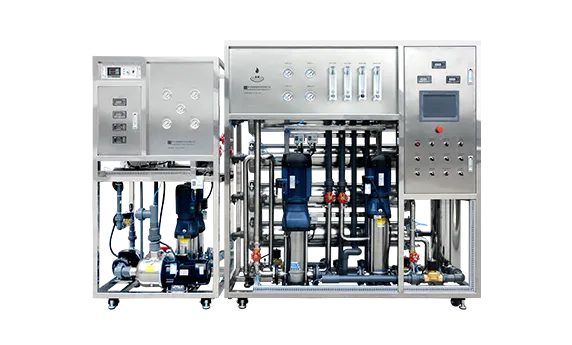
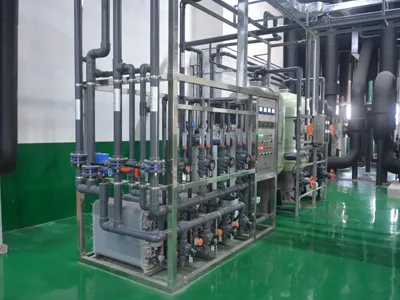
EDI (electrodeionization) is the abbreviation for electro-deionization technology used abroad, and continuous electro-deionization technology is often referred to as CEDI. In reality, this technology is what is commonly known domestically as a packed bed electrodialysis unit. The most crucial core process in electro-deionization (EDI) is the continuous self-regeneration of the ion exchange resin by the H+ and OH- ions generated from the dissociation of water.
Please discuss the development history and current status of EDI technology.
In 1955, the United States used EDI water purification equipment to treat radioactive wastewater; in 1987, Millipore Corporation in the United States first industrialized the production of EDI water purification equipment; in 1991, Ionics Corporation modified its EDI water purification equipment and industrialized it. Currently, US companies providing EDI water purification equipment and engineering services include Electropure, Millipore, Ionpure, Ionics, and E-cell (a Canadian-Japanese joint venture, now acquired by General Electric).
my country has also researched EDI technology for some time, but due to its failure to industrialize the technology, it now lags behind the US. Currently, my country mainly imports EDI products.
Could you please explain the basic principle of ion exchange electroregeneration technology?
The key to ion exchange electroregeneration technology is that it borrows the principle of resin regeneration from EDI. I've been considering this question: since EDI water purification equipment can regenerate spent resin during operation, can this characteristic be used to regenerate spent resin in ordinary ion exchangers? Could an external electroregenerator with a structure similar to EDI water purification equipment, allowing for smooth resin flow, be designed? The answer is yes. As long as spent resin is continuously fed into the external electroregenerator, under the influence of a DC electric field, regenerated resin continuously flows out from the outlet, and the electroregeneration process takes place within the external electroregenerator. In this way, an external electro-regenerator replaces the acid-base regeneration system used in traditional ion exchanger regeneration, enabling the external electro-regeneration of spent ion exchange resins.
What do you think are the advantages of ion exchange electro-regeneration technology compared to traditional acid-base chemical regeneration technology?
Firstly, it is pollution-free. Electro-regeneration relies on the H+ and OH- ions generated by ionization to regenerate the resin, eliminating the need for acids and alkalis and fundamentally eliminating the environmental pollution problems caused by acid-base regeneration.
Furthermore, electro-regeneration is economical. Because this electro-regeneration method relies on water ionization, its power consumption is much lower than that of conventional electrolysis. Additionally, the resin flow during regeneration is fluidized, resulting in low resistance and reduced power consumption. Preliminary estimates suggest that the electricity cost of this electro-regeneration method is only about 10% of the reagent cost of traditional acid-base chemical regeneration. Therefore, for a 300 MW thermal power plant, switching from acid-base regeneration to electro-regeneration could save several million yuan in operating costs annually.
Therefore, it is certain that ion exchange resin regeneration technology is a green, pollution-free, high-tech, and environmentally friendly technology. What are your thoughts on the development prospects of ion exchange resin electroregeneration technology in my country? What are its main future application areas?
External electroregeneration of ion exchange resin is a green water treatment process and a technological revolution in existing ion exchange water treatment, making it very suitable for upgrading existing plants. Simply eliminate the acid and alkali regeneration systems; after the original ion exchangers fail, the resin is transported to the external electroregenerator, electroregenerated, and then returned to the original ion exchangers.
Since ion exchange water treatment is the most widely used and common method in water desalination systems—for example, over 90% of boiler feedwater treatment systems in thermal power plants use ion exchange—the market capacity for this type of ion exchange resin electroregeneration is huge. Based on the amount of acid and alkali consumed, the domestic market is estimated at 2-3 billion yuan.
Furthermore, it can be exported to capture a large international market. Therefore, promoting resin electroregeneration technology has enormous economic and environmental benefits. The main problem currently is the difficulty in industrializing research results due to insufficient understanding of this technology. The pilot test has been successful, and we hope to collaborate with entrepreneurs interested in environmental protection to complete the pilot-scale test and industrialize this technology, placing China's water treatment technology at the forefront of the world.
Editor's Note: Through the interviews, we not only gained a deeper understanding of "ion exchange resin—green regeneration technology," but also deeply appreciated the importance of industrializing technology. In my country, new technologies and inventions emerge every year, but many good technologies are shelved because they cannot find suitable industrialization pathways, which is regrettable. Therefore, we sincerely hope to build a bridge between technical experts and entrepreneurs to help new technologies and patents achieve industrialization and enable enterprises to obtain greater economic benefits.
Appendix: Personal Profile
Professor Wang Fang, born in February 1938, from Pinghu City, Zhejiang Province.
Graduated from Tsinghua University in 1962, and worked at the university until retirement. Awarded an honorary doctorate by the Royal Society of London in 2000.
From 1982, he participated in the Sixth and Seventh Five-Year Plans of National Key Scientific Research Projects, developing research on industrial coal combustion for boilers, and received three awards from the Chinese Academy of Sciences, the Ministry of Coal Industry, the State Planning Commission, and the State Education Commission.
Since 1991, he has been researching electro-deionization water purification and related technologies, and has obtained two invention patents: "Method and Apparatus for Electro-regeneration of Ion Exchange Resin" and "Electro-deionization Soft Water Method and Apparatus Used," as well as two utility model patents: "Electro-deionization Pure Water Unit" (96244874.5) and "Equal-porosity Packed Bed Electrodialysis Unit" (97221361.9). The invention patent "Method and Apparatus for Electro-regeneration of Ion Exchange Resin" was exhibited at the 3rd Einstein World Invention Exhibition and won an international gold medal. The utility model patent "Equal-porosity Packed Bed Electrodialysis Unit" was exhibited at the 2000 Hong Kong International New Product and Technology Exhibition and won a gold medal.
He has authored or translated 10 monographs, including: Boiler Water Treatment, Ion Exchange Resins, Ion Exchange Application Technology, Modern Ion Exchange Technology, International Handbook of Ion Exchange Technology, and Ion Exchange Resin Standard Handbook. He has also published over 60 academic papers.