






Phone:
0086 28 87573647
+86 19150187139

Selection of Water Flux
Given a fixed product water volume, the selected water flux essentially determines the number of membrane elements required for the reverse osmosis unit. A low water flux requires more membrane elements, resulting in lower overall efficiency; however, the low flux leads to less pollutant deposition on the membrane surface, thus slowing down the fouling rate. Conversely, a high water flux requires fewer membrane elements, reducing equipment investment; however, operational experience shows that when the water flux exceeds a certain value, the fouling rate increases exponentially, increasing the risk of membrane fouling. Generally, for groundwater with good quality, a higher flux can be selected during design; for polluted surface water, a lower flux should be chosen.
Selection of High-Pressure Pump
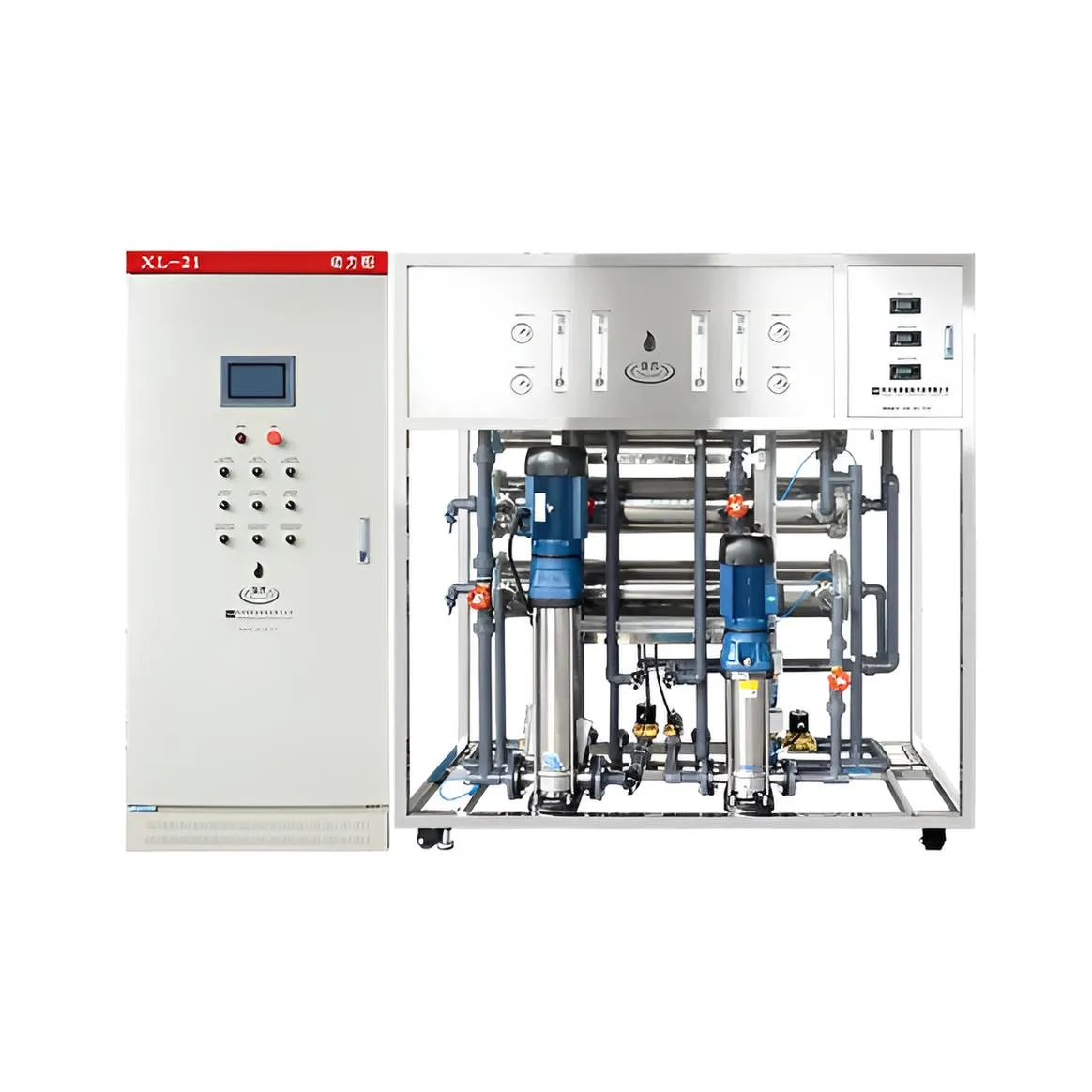
The driving force of the reverse osmosis membrane separation process is the pressure difference, which is provided by the high-pressure pump. As a key piece of equipment in the ultrapure water production system, the performance of the high-pressure pump directly affects the economic efficiency of the reverse osmosis desalination process. High-pressure pumps can be selected based on parameters such as the influent flow rate and required feed water pressure of the reverse osmosis (RO) system. (After selecting the membrane elements, membrane module arrangement, and recovery rate using RO design software, the required feed water pressure and other data can be easily calculated. RO design software can be obtained from membrane manufacturers or downloaded from their websites.)
Currently, the main high-pressure pumps available are multi-stage centrifugal pumps and positive displacement plunger pumps (for small devices). When selecting a multi-stage centrifugal pump, a check valve and an electrically operated slow-opening valve should be installed on the pump's outlet pipe. The former prevents damage to the high-pressure pump from concentrated backflow during shutdown, while the latter prevents damage to the membrane modules due to excessively rapid pressure increase. The pressure increase rate should generally not exceed 0.07 MPa/s. Plunger pumps rely on the reciprocating motion of the piston to directly transfer mechanical energy to the liquid in the form of static pressure. Because the piston rod changes according to simple harmonic motion, the liquid's volumetric flow rate will experience periodic fluctuations over time. Plunger pumps generally have a small and uniform flow rate, a high head that is independent of flow rate, and high efficiency, maintaining high efficiency even when the head and flow rate change. When selecting a plunger pump, a damper must be installed at the pump outlet to eliminate damage to the diaphragm caused by pulsating pressure.





