

Phone:
0086 28 87573647
+86 19150187139

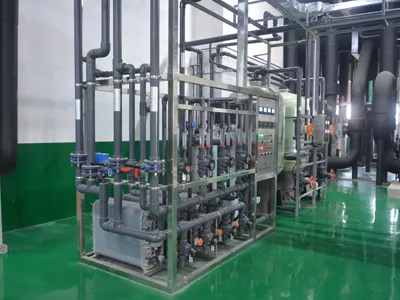
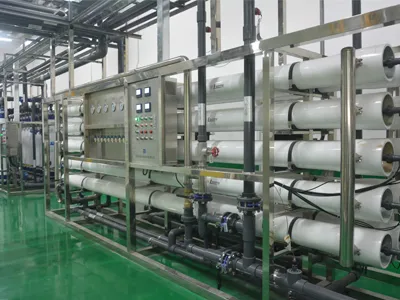
Reverse osmosis membranes are artificial semi-permeable membranes with specific properties, mimicking biological semi-permeable membranes. They are generally made of polymeric materials, such as cellulose acetate membranes, aromatic polyhydrazide membranes, and aromatic polyamide membranes. The diameter of the surface micropores is typically between 0.5 and 10 nm, and the permeability depends on the membrane's chemical structure. Some polymeric materials exhibit good salt repellency but poor water permeation. Other polymeric materials have more hydrophilic groups in their chemical structure, resulting in relatively faster water permeation.
Ultrafiltration membranes are microporous filtration membranes with uniform pore size specifications, ranging from 0.001 to 0.02 micrometers. By applying appropriate pressure to one side of the membrane, solute molecules smaller than the pore size can be sieved out, separating particles with a molecular weight greater than 500 Daltons (atomic mass units) and a particle size greater than 10 nanometers. Ultrafiltration membranes were among the earliest developed polymeric separation membranes, and ultrafiltration devices were industrialized in the 1960s.
Reverse osmosis membranes should possess the following characteristics: (1) high desalination rate at high flow rates; (2) high mechanical strength and service life; (3) ability to function under low operating pressure; (4) tolerance to chemical or biochemical effects; (5) minimal impact from pH, temperature, and other factors; (6) readily available raw materials for membrane fabrication, simple processing, and low cost.
Ultrafiltration membranes have the following application characteristics: (1) no qualitative changes occur during ultrafiltration, allowing for stable operation at room temperature; (2) compact equipment structure, small footprint, and easy operation; (3) simple ultrafiltration separation process and high degree of automation; (4) ability to classify substances of different molecular weights; (5) strong adaptability to water quality and wide range of applications.
Reverse osmosis membranes are used in power, petrochemical, steel, electronics, pharmaceutical, food and beverage, municipal and environmental protection fields, playing a crucial role in seawater and brackish water desalination, boiler feedwater, industrial pure water and electronic-grade ultrapure water preparation, drinking water production, wastewater treatment, and special separation processes. Applications of ultrafiltration membranes: As a pretreatment for reverse osmosis and a final treatment for ultrapure water in pure and ultrapure water preparation processes; used in industrial water for separating bacteria, pyrogens, colloids, suspended impurities, and macromolecular organic matter; purification of drinking water and mineral water; concentration, purification, and clarification in fermentation, enzyme preparation, and pharmaceutical industries; concentration and separation of fruit juices; separation, concentration, and clarification of soybeans, dairy products, sugar refining, wines, tea, vinegar, etc.; purification and recovery of industrial wastewater and domestic sewage; recovery of electrophoretic paint.