








![[Exhibition Preview] Ulupure invites you to BCEIA this October!](/uploads/image/20260228/exhibition-preview-ulupure-invites-you-to-bceia-this-october.webp "[Exhibition Preview] Ulupure invites you to BCEIA this October!")
Phone:
0086 28 87573647
+86 19150187139

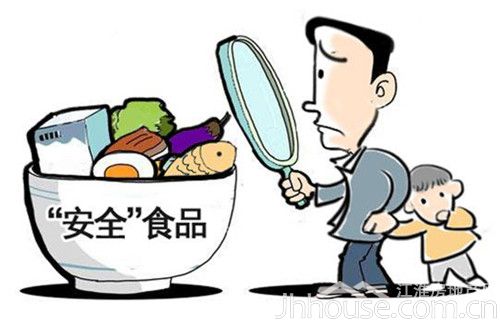
[Abstract] Risk monitoring, risk assessment, and sampling inspection are handled by different departments. The same food product from the same company may face three different administrative departments, requiring three separate sampling inspections. There's even a possibility that the same laboratory and machine might issue three different reports.
A call for legislation prioritizing effectiveness over timeliness is needed.
● The number of regulatory departments is constantly increasing, leading to overlapping management and a lack of coordination.
● Two major laws simultaneously regulate food safety, resulting in chaotic standards.
● Small and micro-sized food enterprises, accounting for 80% of the total, remain outside of legislative oversight.
A single "Food Safety Law" leaves the source of regulation to the "Agricultural Product Quality Law," leaving the majority (80%) of small and micro-sized enterprises to local authorities. Coupled with this overlapping and redundant management system, these three major flaws are the legal and institutional roots of the current ineffective governance of food safety in China.
— Liu Zhaobin, Senior Researcher, Institute for Rule of Law and Development, Peking University
In May 2013, the revision of the Food Safety Law was included in the State Council's first-class legislative plan; in September 2013, the revised draft was submitted to the State Council by the State Food and Drug Administration; in June and December 2014, the Standing Committee of the National People's Congress conducted two reviews and published the draft on the NPC's official website, soliciting public opinions.
On February 9, 2015, at the Fragrant Hills Hotel in Beijing, the China Association for Technical Supervision and Information, the Food Safety Research Center of the China Law Society, the Institute for Rule of Law and Development of Peking University, and the Consumer Rights Protection Law Association jointly held a seminar on the Food Safety Law, inviting experts from various sectors to discuss the second draft of the Food Safety Law submitted to the Standing Committee of the National People's Congress and offer suggestions for its revision. From "Nine Dragons" to "Thirteen Dragons": Streamlining the Management System is Key
"Society has long criticized the 'nine dragons governing the waters' problem. A review of the second draft reveals the addition of departments such as the Grain Bureau and the Ministry of Commerce, bringing the total number of departments involved in the Food Safety Law to 13. Will this turn the original 'nine dragons governing the waters' into 'thirteen dragons governing the waters,' leaving the public feeling that the number of departments is increasing without solving the problems?" Liu Zhaobin, a senior researcher at the Institute for Rule of Law and Development at Peking University, suggests further clarifying the functional relationships.
Liu Zhaobin cites the current food safety inspection system as an example: risk monitoring, risk assessment, and sampling inspection are handled by different departments. The same food product from the same company may face three different administrative departments, requiring three separate sampling inspections, and there's even the possibility of the same laboratory and machine issuing three different reports. "The law stipulates that all inspection costs are paid by the government, meaning taxpayers have to pay three separate fees. This duplication and overlap leads to significant waste, increasing the burden on businesses and the government. Most alarmingly, the results of these three inspections are not open, transparent, or shared, creating huge regulatory loopholes," Liu Zhaobin suggested. He recommended further reducing interdepartmental overlap and fundamentally minimizing redundancy to ensure efficient system operation.
"Behind legislation is the establishment of a system; behind amending articles is the modification of the system. This amendment has high aspirations and strong力度, but the biggest concern is that system construction will lag behind. Can a relatively centralized and streamlined management system be built for food safety issues, led by a single department, forming overall coordination, instead of a system of equal footing, coordination without coordination, lacking decision-making power, and lacking centralization and effectiveness? Can a relatively clear, centralized, and easily operable system be established, forming a unified system with unified standards, unified procedures, and unified penalties?" Wang Chenguang, a professor at Tsinghua University Law School, believes the primary goal of the amendment is to improve the system. "This law doesn't address establishing a system for coordination between institutions," Wang Chenguang argues. He believes that without legal basis, it's difficult for departments to establish inter-departmental coordination and information sharing mechanisms, making it hard to bridge various civil, administrative, and criminal liabilities, rendering social co-governance meaningless.
“In the past, we called drafting a law ‘a matter of departments lighting a fire, smoke billowing everywhere,’ with each department setting up its own chapter and each section writing its own clause. Was the entire legislative approach centered on food or on defining government functions? If we focus on departments instead of food, we forget what the Food Safety Law is actually for.” Song Ruilin, Executive Chairman of the China Pharmaceutical Innovation Promotion Association, who has participated in the drafting of many laws, hit the nail on the head. “It’s not about elevating the functions of any one department; it’s about clearly defining the legal relationships. In Brazil, the Ministry of Agriculture is in charge of food safety. As long as the system and mechanisms are well-established, even the Ministry of Finance could manage food safety.”
Can the Agricultural Product Quality Safety Law and the Food Safety Law be merged?
“I strongly advocate abolishing the existing Agricultural Product Quality Safety Law and merging it with the Food Safety Law into one law!” Liu Zhaobin passionately appealed.
Because the Sudan Red incident and other issues mostly occurred in the agricultural product sector, the state first promulgated the Agricultural Product Quality Safety Law. After the promulgation of the Food Safety Law, the Agricultural Product Quality Safety Law was neither amended nor merged. "Using two laws to regulate a single food product is a waste of legislative resources. The bigger problem lies in the lack of coherence in their content," Liu Zhaobin analyzed. Because it targets agricultural products, the *Agricultural Product Quality and Safety Law* primarily focuses on external environmental requirements such as production location, environment, fertilizers and pesticides, and product packaging, while essentially omitting any mention of the nutritional value, safety, and physicochemical indicators of the food itself.
"From an international perspective, the *Food Safety Laws* of the United States, Japan, and the European Union have essentially achieved full-chain management from farm to table, while our chain is broken. Our *Food Safety Law* only covers food processing, distribution, and catering," Liu Zhaobin suggested. He proposed merging the two laws during this revision of the *Food Safety Law*, making the system design more focused and concentrated on food.
"Using two laws to regulate a single food product also leads to confusion in concepts and standards," Liu Zhaobin argued. Agricultural products include agriculture, forestry, animal husbandry, sideline production, and fisheries—referring to large-scale agriculture—but the *Agricultural Product Quality and Safety Law* actually refers to small-scale agriculture—edible agricultural products. This concept overlaps with the product category in the *Food Safety Law*. If food includes edible agricultural products, then there's no need to further define edible agricultural products.
"The Chinese dairy industry as a whole has lost the trust of the people. The problem lies in raw milk, in the lack of standardized management at the source. The *Agricultural Product Quality and Safety Law* may not be repealed, but at least the parts related to food must be written into the *Food Safety Law*, so that the two are inherently, organically, and completely connected. If the current situation is not changed, and the two laws are merely pieced together, it's not just a matter of gaps, but a terrifying void," Song Ruilin frankly stated.
Small businesses, accounting for 80%, remain in a legal vacuum
"The biggest flaw in my country's *Food Safety Law* is that even today, it doesn't really regulate the 80% of food enterprises," Liu Zhaobin said. This is the biggest pain point of the original legislation and also the biggest hidden worry today.
"Why is it called 'not really regulated'?" Liu Zhaobin explained that according to Article 35 of the *Food Safety Law*, we leave the specific management measures for small and micro-sized food processing enterprises to the provincial people's congress standing committees for formulation. The food industry accounts for approximately 17.6% of GDP, making it a typical pillar industry. However, this sector is dominated by small and micro-sized enterprises, numbering around 350,000, representing 80% of all food enterprises and accounting for about 20% of the industry's output. What are the consequences of entrusting the management of 80% of these enterprises to provincial people's congresses and governments under a single food law?
"We conducted a thorough investigation. Since the implementation of the Food Safety Law, no more than eight out of over 30 provinces nationwide have had their legislation enacted by their provincial people's congresses, and including those that issued regulations, no more than 15 provinces have done so. In other words, to this day, 80% of the food production by small enterprises in my country is in a legal vacuum. Leaving small enterprises to provincial people's congresses for legislation, and with five or six years having passed and no one holding them accountable, to put it bluntly, this is a matter of national conscience and the conscience of legislators, and it should be addressed squarely," Liu Zhaobin expressed deep concern. "US law exempts small food businesses and small farmers with assets under 500,000 yuan from GMP and HACCP certifications, relaxing entry barriers and lowering requirements for hardware and management systems, while still setting minimum standards for food safety," said Li Jun, director of the Product Quality and Safety Law Research Center at the University of International Business and Economics. He believes that the experience of foreign classification management is worth learning from.
"Including micro and small enterprises within the scope of the Food Safety Law, and specifying it in detail, is something we have the capability to solve," said Song Ruilin.
The Food Safety Law should not be rushed into promulgation.
Regarding consumer rights protection, some experts hold differing opinions on the revised draft. He Shan, president of the China Consumer Rights Protection Law Research Association, said: "Article 138, paragraph 2, stipulates that if a producer manufactures food that does not meet food safety standards, or an operator knowingly sells food that does not meet food safety standards, the consumer, in addition to claiming compensation for losses, may also demand from the producer or operator a penalty of ten times the price paid or three times the losses; if the increased compensation is less than one thousand yuan, it shall be one thousand yuan. The word 'knowingly' was added in this revision, and I believe this is a clause protecting operators who knowingly sell or manufacture counterfeit food!"
"Selling counterfeit food requires 'knowing' to bear punitive damages. Proving 'knowing' is difficult. Does selling counterfeit food admit to 'knowing'? These are common-sense questions. This objectively exonerates counterfeiters and sellers and conflicts with the Consumer Rights Protection Law," He Shan said. Article 113, Paragraph 2 stipulates that "anyone who knowingly provides production or business premises or other conditions for engaging in the illegal activities stipulated in the preceding paragraph shall be ordered by the food and drug administration department of the people's government at or above the county level to cease the illegal activities, have their illegal gains confiscated, and be fined between 50,000 and 100,000 yuan. If the legitimate rights and interests of consumers are harmed, they shall bear joint and several liability with the food and food additive producers and operators." He Shan believes that proving this "knowingly" is also difficult and contradicts the provisions of the Consumer Rights Protection Law.
Furthermore, Article 114, Paragraph 2, also adds the word "knowingly."
"I've seen data showing that 92% of the 3,426 food safety incidents exposed by the media from 2004 to 2013 were man-made. The Food Safety Law is already in its second review; if similar clauses are passed, the consequences will be endless!" He Shan hopes the state will exercise extreme caution.
"The core of revising the Food Safety Law should be a comprehensive consideration of whether our food safety governance system has significant deficiencies, and whether its basic principles, institutional framework, and systems have major problems," Li Jun urged the state to conduct top-level design and "act only after careful planning."
"The Food Safety Law, at its source, is handed over to the Agricultural Product Quality Law, leaving the bulk of the burden—80% of small and micro-enterprises—to local governments. Coupled with the overlapping and redundant system of 'nine dragons governing the waters,' these three major flaws are the legal and institutional roots of the current ineffective governance of food safety in China. These are serious weaknesses. Without addressing these three issues, our top-level design is flawed," Liu Zhaobin suggested that the Food Safety Law should not be rushed into promulgation.
"The US FDA (Food and Drug Administration) holds 500 meetings to formulate a single food safety regulation; it's extremely detailed, and many of its practices are worth learning from. my country's food safety issues are too complex, and clarifying them is a very time-consuming task. If we set targets and rush the process to expedite promulgation, it's neither realistic nor effective," Song Ruilin suggested establishing a cooling-off period to allow for proper reflection.