
Phone:
0086 28 87573647
+86 19150187139

Water is the most widely used raw material in pharmaceutical production, used in both the manufacturing process and the preparation of pharmaceutical formulations.
The Chinese Pharmacopoeia (2000 edition) classifies pharmaceutical water into purified water, water for injection, and sterile water for injection based on their intended use.
The raw water for pharmaceutical production is usually tap water supplied by a water company or deep well water, and its quality must meet the People's Republic of China National Standard GB5749-85, "Standards for Drinking Water Quality." Raw water cannot be directly used for the preparation of formulations or for testing.
Purified water is water for pharmaceutical use obtained from raw water through distillation, ion exchange, reverse osmosis, or other suitable methods, and contains no additives.
Because different production methods have varying potential for contamination, special attention must be paid to the microbial contamination of each production unit. The water from each part and the outflowing water should be monitored frequently, especially when these parts are not used for several hours before being reused.
Purified water can be used as a solvent for preparing ordinary pharmaceutical formulations or for testing, but it must not be used for the preparation of injectable formulations.
Water for injection is purified water obtained through distillation and must meet the requirements for bacterial endotoxin testing. Water for injection must be grown, stored, and dispensed under conditions designed to prevent endotoxin formation. It can be used as a solvent for preparing injectable solutions.
Sterile water for injection is prepared according to the injection manufacturing process and is mainly used as a solvent for sterile powders for injection or as a diluent for injection solutions.
my country's "Specifications" (revised in 1998) define process water as water used in pharmaceutical manufacturing processes, including drinking water, purified water, and water for injection.
In addition, process water includes:
1. Initial rinse water (GMP for large-volume injections specifies a colony count <0.5 CFU/ml);
2. Final rinse water (GMP for large-volume injections specifies a colony count <0.1 CFU/ml);
3. Sterilization tank cooling water (GMP for large-volume injections specifies a colony count <0.01 CFU/ml);
4. Softened water and ammonia water for cooling, etc., for other purposes.
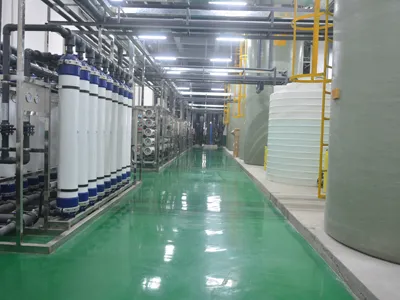
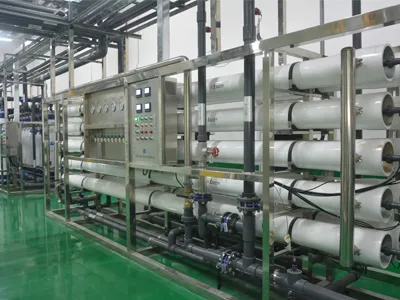
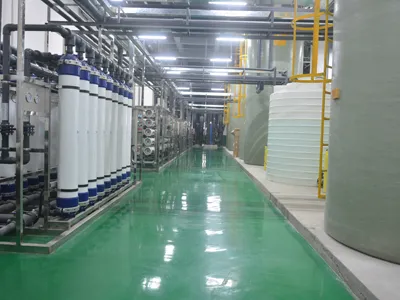
The scale of a water treatment system depends on the raw water quality, the production water volume, and the process requirements for water quality. The raw water quality and process requirements determine the complexity of the water treatment process, while the water volume only determines the size of the equipment. Generally, when the raw water is tap water, less pretreatment equipment is needed, while when the process has higher water quality requirements, more comprehensive equipment is used for deionization, sterilization, and particulate removal. Water treatment systems are subject to significant dynamic changes; sampling results from raw water taken a few days ago are often invalid a few days later. On the other hand, this raw water is often used for the large-scale production of extremely expensive pharmaceuticals. Therefore, to some extent, water treatment equipment is unreliable and must be validated beforehand, followed by rigorous daily monitoring and control.
The purpose of water system validation is to test whether the water treatment system can stably supply a quantity and quality of qualified water under various possible future conditions. Validation means providing written evidence in this regard. To accomplish this task, it is necessary to conduct sampling tests on the system under different operating conditions over a relatively long period.
This chapter primarily discusses the validation of purified water and water for injection, including pure steam, commonly used by pharmaceutical manufacturers. For details regarding softened water used in specific production processes (such as softened water for boilers), cooling water for large-volume injections, initial rinse water, final rinse water, and ammonia, please refer to the discussions on production process validation in later chapters. Sterile water for injection can be considered as an injectable drug; please refer to the relevant content on injectable drug validation for details.