





Phone:
0086 28 87573647
+86 19150187139

GB/T 6682—2008 Specifications and Test Methods for Water Used in Analytical Laboratories stipulates that the raw water for analytical laboratories should be drinking water or water of appropriate purity. Water used in analytical laboratories is divided into three levels: Level 1, Level 2, and Level 3 (Table 1).
Grade I water: Used for analytical tests with strict requirements, including experiments with particle size requirements, such as high performance liquid chromatography (HPLC) analysis water; Grade I water can be produced by distilling Grade II water through quartz equipment or treating it with an ion exchange mixed bed, and then filtering it through a 0.2μm microporous membrane.
Secondary water: used for inorganic trace analysis and other experiments, such as water for atomic absorption spectrometry analysis; secondary water can be produced by multiple distillation or ion exchange.
Grade III water: used for general chemical analysis experiments; Grade III water can be prepared by methods such as distillation or ion exchange.
Compared with ISO 3696—1995, "Specifications and Test Methods for Water Used in Analytical Laboratories", the requirements are the same except for a slight difference in the specified evaporation residue temperature (ISO 3696—1995 requires an evaporation temperature of 110°C).
Table 1: National Standard Quality Requirements for Water Used in Analytical Laboratories
name | Grade I water | Secondary water | Level 3 water |
pH value (25℃) | — | — | 5.0-7.5 |
Electrical conductivity (25℃) / (mS/m) | ≤0.01 | ≤0.10 | ≤0.50 |
Content of easily oxidizable substances (as oxygen) / (mg/L) | — | ≤0.08 | ≤0.4 |
Absorbance (254nm, 1cm optical path) | ≤0.001 | ≤0.01 | — |
Evaporation residue (105℃±2℃) content (mg/L) | — | ≤1.0 | ≤2.0 |
Soluble silicon (as SiO₂) content (mg/L) | ≤0.01 | ≤0.02 | — |
1. Since it is difficult to determine the true pH value of water at the purity level of Grade I and Grade II water, no pH range is specified for Grade I and Grade II water.
2. Since it is difficult to determine oxidizable substances and evaporation residues at the purity of Grade I water, no limits are specified for them. Other conditions and preparation methods can be used to ensure the quality of Grade I water.
3. 1 mS/m = 10 μS/cm.
Compared to bulk purified water/bulk water for injection as defined in the pharmacopoeia, absorbance and soluble silica content are two unique quality attributes of laboratory water. When measuring copper or iron ions using spectrophotometry, high-purity water is used as a reference to determine its absorbance. The high-purity water is then pushed into the optical path to adjust the transmittance to 100%. The absorbance measured after the colorimetric reaction of the water sample should be subtracted from the absorbance measured after the colorimetric reaction of the high-purity water sample. Therefore, the absorbance of laboratory pure water needs to be controlled.
Inevitably, some silicates will dissolve in water in nature. Inorganic silicon is one of the most complex inorganic substances in water and is difficult to remove. Therefore, pure water or ultrapure water will contain more or less a certain amount of silicon impurities.
In both the electronics industry and trace analysis experiments at the ppt level, the silicon content of ultrapure water must be minimized (Table 2). In semiconductor/flat panel display processes within the electronics industry, the silicon concentration in ultrapure water significantly impacts product accuracy, yield, and raw material utilization. Furthermore, in ppt-level trace analysis, silicon, as a weakly ionized ion, has minimal impact on the resistivity of pure water due to its low concentration, making it difficult to detect. Using silicon-containing water as a blank control would inevitably result in inaccurate analytical results.
Table 2: Standard requirements for laboratory water for soluble silicon (calculated as SiO₂) / (μg/L)
Standards system | Grade I water | Secondary water | Level 3 water |
ISO 3696—1995 Standard and test methods for water used in analytical laboratories | 10 | 20 | — |
ASTM D1193—2006(2018) Standard Specification for Reagent Water | 3 | 3 | 500 |
GB/T 6682—2008 Specifications and test methods for water used in analytical laboratories | 10 | 20 | — |
GB/T 33087—2016 Specifications and Test Methods for High Purity Water for Instrumental Analysis | 10 | — | — |
GB/T 11446—2013 Electronic Grade Water | 2 | 10 | 50 |
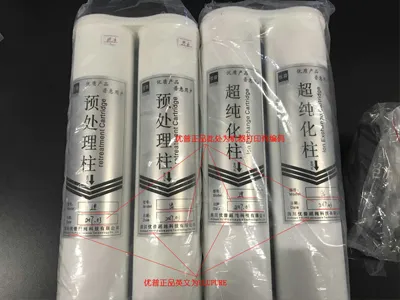
Silicic acid is a very weak acid that does not readily ionize in water, and the exchange efficiency of ion exchange resins with silicon is easily saturated, making it a relatively difficult substance to remove. If the purification packing material is of poor quality or the ratio is improper, its adsorption effect will be poor, making it difficult to guarantee the removal of silicon ions from the water. To some extent, silicon is one of the standards for evaluating the quality of a water purifier's purification column. Furthermore, data shows that when water purifier consumables are nearing the end of their lifespan, silicon is the first ion to penetrate the ion exchange column and enter the product water—the so-called "silicon penetration phenomenon." In the final moments before the purification column is exhausted, before the resistivity drops sharply, a large amount of silicon will dissolve into the product water in a short period. Moreover, the amount of dissolved silicon also affects the penetration of boron through the ion exchange resin.
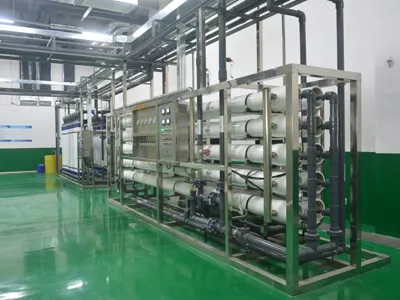
Besides posing a challenge to the removal capabilities of ion exchange resins, silicon impurities also react differently to other purification conditions. Among the purification technologies used in existing pure water equipment, RO achieves a silicon removal rate of 80%, while EDI achieves a rate as high as 99%. Pure water systems with EDI modules are more suitable for supplying water to laboratories sensitive to silicon content. Users with strict requirements on silicon content should pay attention to the pure water system's ability and effectiveness in removing silicon impurities when purchasing one.





