






Phone:
0086 28 87573647
+86 19150187139

Ultrapure water: Water in which conductive media are almost completely removed, and non-dissociated colloidal substances, gases, and organic matter are also removed to very low levels. Its resistivity is greater than 18 MΩ·cm or close to the limit of 18.25 MΩ·cm (25℃).
High-purity water: Water with a slightly lower purity than ultrapure water, essentially the same concept. Some manufacturers also refer to national standard grade II water as high-purity water.
Deionized water: Pure water after removing impurities in ionic form. Even after removing anions and cations, soluble organic matter still exists in the water.
Pure water: Raw water that has undergone a complete water treatment process, including reverse osmosis and sterilization devices, to remove most inorganic salt ions, microorganisms, and organic impurities, making it safe for direct consumption.
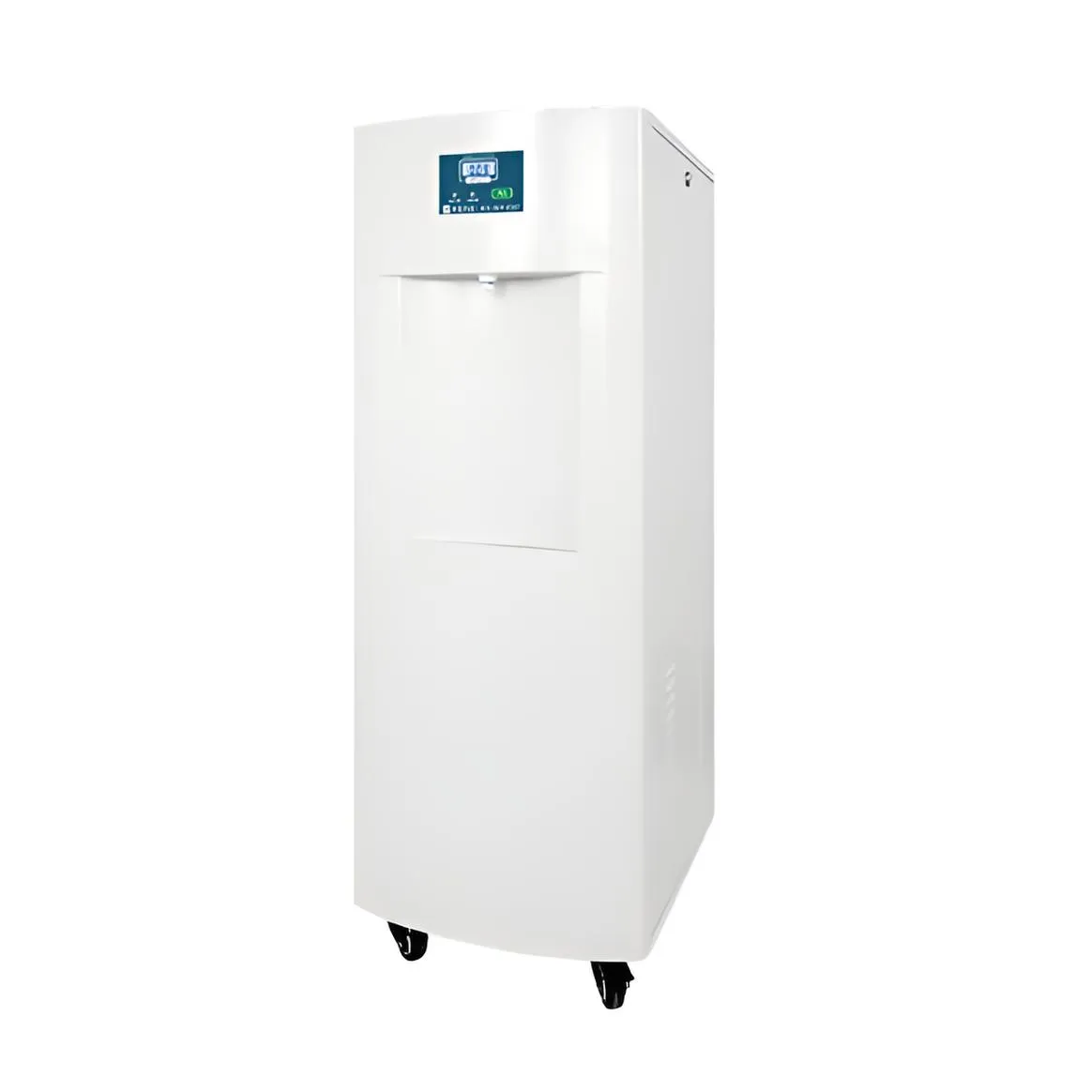
UP water: Short for Ultrapure water. The UP logo is often seen on ultrapure water machines produced by the leading domestic ultrapure water machine brand, UPU®.
RO water: Water produced from a reverse osmosis membrane using reverse osmosis technology; also known as commercially available purified water. The desalination rate of the reverse osmosis membrane is over 98%.
Pure water: Deionized water prepared through methods such as reverse osmosis, distillation, and ion exchange. Pure water has a TDS < 5 ppm.
Distilled water: Pure water prepared through distillation.
Triple-distilled water: Pure water prepared through three distillations.
Multiple-distilled water: Pure water prepared through more than three distillations.
Grade I water: Water with a conductivity of less than or equal to 0.1 μS/cm at 25℃ as specified in GB6682-2008. Laboratory Grade I water corresponds to a resistivity greater than 10 MΩ·cm.
Grade II water: Water with a conductivity of less than or equal to 1.0 μS/cm at 25℃ as specified in GB6682-2008. Laboratory Grade II water corresponds to a resistivity greater than 1 MΩ·cm.
Grade III water: Water with a conductivity of less than or equal to 5.0 μS/cm at 25℃ as specified in GB6682-2008. Laboratory Grade III water corresponds to a resistivity greater than 0.2 MΩ·cm.
Purified water: Pure water used in the pharmaceutical industry, requiring a conductivity of less than 2.0 μS/cm and a corresponding resistivity greater than 0.5 MΩ·cm.
Water for injection: Pure water that can be used for injection after removing pyrogens.





