Phone:
0086 28 87573647
+86 19150187139

I. Overview
Water is the most widely used basic raw material in pharmaceutical production, used in both the manufacturing process and the preparation of drug formulations. Pharmaceutical water is the lifeline of the pharmaceutical industry.
With continuous advancements in science and technology, the preparation technology of pharmaceutical water has undergone revolutionary changes. In many developed countries, such as the United States, the limitation that water for injection (WFI) must be prepared by distillation has long been overcome. Highly Purified Water (HPW), with its more advanced, energy-efficient, and stable quality, and its preparation process, was officially recognized as early as 1975 (United States Pharmacopeia 19th Edition: USP19). Currently, the United States Pharmacopeia has explicitly recognized the reverse osmosis (RO)-based HPW process as a legally permissible process for producing water for injection in seven consecutive editions. Furthermore, after decades of pharmaceutical practice, HPW water for injection production technology has proven to be one of the most advanced and reliable methods; so much so that reverse osmosis is the most commonly used process for producing water for injection in US Drug Patent 25. Because HPW meets or exceeds the various physicochemical parameters of WFI, it has been officially recognized as a Class III water quality in Europe since June 2002. Today, HPW based on RO has been recognized by major developed countries representing advanced pharmaceutical technology and has become one of the standard preparation methods for medical purified water.
In the process of aligning with international standards, my country's Pharmacopoeia has also redefined the legal preparation methods for pharmaceutical water. The pharmaceutical water included in the Chinese Pharmacopoeia (2000 edition) has made significant progress compared to the past. It is divided into purified water, water for injection, and sterile water for injection based on different applications. For the first time, distilled water has been replaced with purified water, and purified water is specifically defined as "water prepared for pharmaceutical use by distillation, ion exchange, reverse osmosis, or other suitable methods." This effectively abandons the restriction that the production process "must be distillation," laying the legal foundation for relevant enterprises to adopt the internationally popular reverse osmosis HPW method to prepare purified water. More importantly, the new national pharmacopoeia defines water for injection as "water obtained by distillation of purified water," thus making it possible to incorporate RO technology into the preparation process of water for injection. The 2000 edition of the National Pharmacopoeia represented a significant step forward in water treatment technology, bringing it closer to international advanced levels.
Compared to traditional distillation methods, the new process based on reverse osmosis and incorporating the latest electrodeionization (EDI) technology offers distinct advantages and advancements.
1. High Efficiency and Energy Saving. Distillation is the oldest pharmaceutical water preparation process, primarily involving multi-stage distillation, high-pressure fractional distillation, and centrifugal purification distillation. All distillation methods are conducted at 120°C, resulting in completely sterile water. However, this leads to substantial energy consumption; furthermore, the high temperatures necessitate all equipment components to withstand high-temperature shocks, resulting in high equipment costs and maintenance expenses. The HPW process utilizes mature reverse osmosis technology combined with highly efficient ozone disinfection. The entire system operates at ambient temperature and low pressure, resulting in lower equipment investment, lower operating and maintenance costs, and reliable energy savings. The operating cost of membrane treatment is only 12-15% of that of distillation, making it highly economical and competitive.
2. Stable and Reliable. With the accelerating pace of industrialization, the discharge of large quantities of complex waste has exacerbated global pollution, particularly water pollution. Volatile organic pollutants, whose boiling points are mostly below the vaporization temperature of water, readily enter the product water during distillation without treatment. Simple distillation methods are ineffective in removing them, necessitating filtration methods such as activated carbon adsorption, which increases the instability of the system and water quality. Membrane processes utilize multi-media filters for pretreatment; the microporous permeation principle of reverse osmosis membranes ensures the removal of all larger ions and molecules in the water, easily removing volatile organic pollutants with larger molecular diameters, fundamentally ensuring that organic matter levels meet pharmacopoeia standards.
3. Advanced and Environmentally Friendly. Membrane-based combined processes have become the mainstream technology for pharmaceutical water production worldwide, replacing traditional pure distillation methods. In recent years, the emergence of Continuous Electrodeionization (CEDI), representing the highest level of pharmaceutical water preparation technology, has enabled pharmaceutical water preparation processes to abandon traditional ion exchange technologies that generate associated waste acid and alkali pollution. This allows for fully automated computer control, continuous production, and safe, pollution-free operation. The essence of CEDI technology lies in the ingenious combination of traditional ion exchange and electrodialysis: under the influence of an electric field, ions in the anion and cation exchange resins undergo directional migration. The migrated ion holes are then filled by anions and cations in the water, thus achieving resin polishing and regeneration while the anions and cations migrate towards the ion-permeable membrane. Ions that have passed through the selective permeation membrane are trapped in channels called "concentrate chambers" and discharged along with the "concentrate." The resin consumption of the CEDI system is only 5% of that of traditional mixed beds, making it economical and efficient. Simultaneously, since most gases dissolved in water, such as carbon dioxide, are weakly charged, CEDI can effectively remove them. Gram-negative bacteria, which have a significant impact on pharmaceutical water, carry a negative charge and are adsorbed onto the surface of the cation exchange resin, thus being in the most active region of hydrolysis and completely killed.
Prominent GmbH, a multinational group specializing in the research and manufacture of water treatment equipment, enjoys a high reputation in the field of water treatment, especially in the manufacture of various process water equipment. It has consistently been committed to the application research and innovation of pharmaceutical process water equipment and technologies, holding a leading position in this field.
Prominent's equipment adheres to the advanced and rigorous style of German manufacturing technology. Based on different raw water influent qualities and final water quality standards, it integrates and combines rationally designed functional modules to meet the diverse needs of end users.
II. Raw Water Quality
Prominent's pharmaceutical water preparation equipment is suitable for raw water that meets the requirements of the People's Republic of China National Standard GB5749-85 "Standards for Drinking Water Quality," which can be municipal tap water or other water sources that meet the requirements.
III. Classification and Quality Standards of Pharmaceutical Process Water
Prominent's pharmaceutical water preparation system follows a modular design concept. Based on functional units such as pretreatment, oxidation disinfection, multi-media filtration, RO reverse osmosis, UV disinfection, EDI continuous deionization, and storage and external delivery, Prominent's advanced technology, sophisticated processes, and strict quality control are implemented in every functional unit during the design, manufacturing, and commissioning processes. The final water production unit is optimized and combined through various functional modules according to different water standards, thereby ensuring the high performance and high quality of the entire system, so that the produced water fully meets or exceeds the water quality standards for purified water and water for injection.
The main types of water used in medical procedures are purified water and water for injection. Their uses and water quality requirements are strictly regulated in the National Pharmacopoeia, as shown in Tables 1, 2, and 3.
Table 1: Classification of Process Water
Water Quality Category | Use | Water Quality Requirements
Drinking Water | 1. Source for preparing purified water
2. Initial washing of oral dosage bottle
3. Initial washing of equipment and containers
4. Cleaning, soaking, and extraction of Chinese medicinal materials and processed Chinese medicinal slices Should meet the Hygienic Standards for Drinking Water (GB5749-85)
Purified Water | 1. Source for preparing water for injection (pure steam)
2. Final washing water for equipment, utensils, and packaging materials that come into direct contact with non-sterile drugs
3. Initial washing of injection and sterile drug bottles
4. Ingredients for non-sterile drugs
5. Refining of non-sterile drug raw materials Should meet the standards of the Chinese Pharmacopoeia
Water for Injection | 1. Final rinsing water for packaging materials that come into direct contact with sterile products
2. Ingredients for injection and sterile rinsing agents
3. Refining of sterile active pharmaceutical ingredients
4. Final washing water for packaging materials that come into direct contact with sterile active pharmaceutical ingredients Should meet the standards of the Chinese Pharmacopoeia
Table 2: Purified Water Quality Standards:
Item | Chinese Pharmacopoeia (2000 Edition) European Pharmacopoeia (2000 Supplement) ① United States Pharmacopeia (24th Edition) ② Source: This product is prepared by distillation, ion exchange, reverse osmosis, or other suitable methods. Prepared from drinking water that meets legal standards by distillation, ion exchange, or other suitable methods. Prepared from drinking water that meets the legal requirements of the U.S. Environmental Protection Agency, the European Community, or Japan by suitable methods. Properties: Colorless, clear liquid, odorless and tasteless. Colorless, clear liquid, odorless and tasteless. pH: Compliant with regulations. Ammonia: 0.3 μg/ml. Ammonium compounds, sulfates and calcium salts, nitrites, carbon dioxide, non-volatile matter: Compliant with regulations. Nitrates: 0.06 μg/ml. Heavy metals: 0.5 μg/ml. Aluminum salts: This item needs to be controlled during the production of dialysis solution. Easily oxidizable substances: Compliant with regulations. Total organic carbon: 0.5 mg/L 0.5 mg/L
Conductivity - 4.3 μS/cm (20℃) Complies with regulations
Bacterial Endotoxin - 0.25 E.U./ml -
Sterility Test - - Complies with regulations (for control when preparing sterile preparations)
Microbial Exceedance Correction Standard ③ - 100 CFU/ml 100 CFU/ml
Table 3: Standards for Water for Injection
Item Chinese Pharmacopoeia (2000 Edition) European Pharmacopoeia (2000 Supplement) ① United States Pharmacopeia (24th Edition) ②
Source This product is water obtained by distillation of purified water. Obtained by distillation of drinking water or purified water that meets legal standards by appropriate methods. Obtained by distillation or reverse osmosis purification of drinking water that meets the legal requirements of the US Environmental Protection Agency, the European Community, or Japan.
Properties Colorless and clear, odorless and tasteless Colorless and clear, odorless and tasteless -
pH 5.0-7.0 - -
Ammonia 0.2μg/ml - -
Ammonium compounds, sulfates and calcium salts, nitrites, carbon dioxide, non-volatile matter Compliant - -
Nitrates 0.06μg/ml 0.2μg/ml -
Heavy metals 0.5μg/ml 0.1μg/ml -
Aluminum salts - This item needs to be controlled when used in the production of permeate -
Easily oxidizable substances Compliant Compliant -
Total organic carbon - 0.5mg/L 0.5mg/L
Conductivity - 1.1μS/cm (20℃) Compliant
Bacterial endotoxins 0.25E.U./ml 0.25E.U./ml 0.25E.U./ml
Sterility test - - Compliant (controlled when used in the preparation of sterile preparations)
Microbial exceedance correction standard ③ - 10 CFU/ml 10 CFU/ml
Notes: ① ① For the European Pharmacopoeia, either TOC or easily oxidizable substances can be monitored.
② The United States Pharmacopeia (USP) stipulates that TOC and conductivity should be monitored for water for injection (raw materials) used by the company itself, while commercially used water for injection should meet the testing requirements for sterile water for injection. The table lists the monitoring items for water for injection used by the company itself.
③ The microbial exceedance correction standard refers to a certain value of microbial contamination indicating that the water for injection system has deviated from normal operating conditions and corrective measures should be taken to bring the system back to normal operating status.
IV. Process Description
The purified water and water for injection system consists of modular water treatment equipment, cleaning and product water storage equipment, distribution pumps, and piping networks. The following description focuses on the water treatment system equipment, and the system flow diagram is as follows:
The raw water quality must meet drinking water standards. Water to be treated enters the pretreatment system under its own pressure or after secondary pressurization from the municipal water supply network. Ozone is added simultaneously for oxidation to reduce hardness and for disinfection and sterilization. The filtered water then enters a two-stage RO system equipped with a safety cartridge filter. The permeate is further disinfected by ozone before entering the purified water storage tank. There, it passes through an ultraviolet residual ozone remover to remove all remaining ozone and undergoes further disinfection. The purified water is then pumped to the point of use, completing the purified water production process. The purified water in the tank is continuously circulated by an external pump, with O3 added during circulation for continuous disinfection—removing residual O3 to ensure consistent water quality.
Prominente water for injection employs an advanced continuous electro-deionization (EDI) deep purification process. A portion of the purified water is sent to the downstream unit, the EDI unit. In the EDI unit, ions are further removed. The effluent passes through a precision cartridge filter and enters a steam-heated storage tank for water for injection. It is then pumped to a plate heat exchanger for cooling before entering the water for injection network.
Both purified water and water for injection are returned to the storage tank, achieving self-circulation when water is not used at the point of use.
The entire system is centrally controlled by a PLC for automatic operation.
V. Equipment Description
The equipment is described using a production capacity of 1 m³/h as an example.
1. Pretreatment System
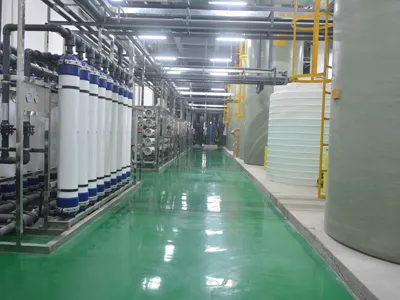
The pretreatment system typically includes a quartz sand filter, an activated carbon filter, and, if necessary, a water softener. Each unit can automatically backwash with ozone water and automatically discharge it. Auxiliary equipment includes an automatic dosing system and an ozone generation and dosing system.
Its main function is to ensure a stable and qualified influent water quality for the secondary RO system under different influent conditions.
Pretreatment system module dimensions (L*W*H mm): 1200mm*800mm*1800mm
2. Secondary RO System
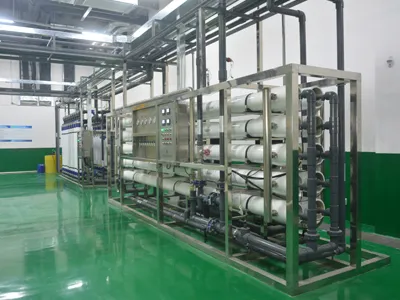
The secondary RO system mainly includes a security filter, a high-pressure pump, and a reverse osmosis membrane stack system.
2.1 Security Filters for Primary and Secondary RO Systems
After the pretreatment system, the water to be treated enters a security filter for further treatment before entering the RO membrane via the high-pressure pump. The first-stage security filter has a filtration accuracy of 5 microns; the second-stage RO filter has an accuracy of 3 microns. This ensures that particles larger than 5 microns do not enter subsequent units, guaranteeing a stable and safe feed water for the subsequent RO system, thus protecting the high-pressure pump and membrane.
2.2 Primary and Secondary High-Pressure Pump System
Low-pressure protection is used at the inlet, and high-pressure protection is used at the outlet. The high-pressure pump is a high-efficiency centrifugal water pump.
2.3 RO Membrane System
TFC membranes from Hydranautics, USA, are used to remove salt from the raw water. The system desalination rate is >= 99.0%.
2.4 Primary and Secondary Reverse Osmosis Pure Water Flushing and Chemical Cleaning Systems
Flushing and chemical cleaning systems are installed for the primary and secondary membrane stacks. The cleaning water tank is first filled with purified water to the predetermined level. During the operation of the membrane system, high concentrations of sparingly soluble salts and other trapped impurities will form a concentration layer on the membrane surface. Under normal operating conditions, due to the continuous flushing of concentrated brine, this layer can flow out of the membrane surface and be discharged before precipitation or scaling occurs. When the system malfunctions and shuts down, or during operation, to prevent precipitation on the membrane surface, the concentrated brine inside the membrane and stainless steel pipes should be automatically flushed with product water to displace the brine, ensuring the membrane and pipes are completely immersed in the product water and preventing precipitation due to self-cleaning.
Flushing can remove some of the dirt caused by osmosis, thus effectively maintaining the membrane and the equipment.
When the system performance significantly deteriorates and flushing can no longer restore or approach its original performance, chemical cleaning is necessary. This must be carried out under computer control, following appropriate chemical formulations and operating procedures.
Module dimensions of the secondary RO system (L*W*H mm): 1600mm*800mm*1800mm
3. Purified water storage tank (not included in the equipment scope)
Equipped with level control, and
① Made of 316L stainless steel, with electropolished and passivated inner walls;
② Equipped with a 0.2μm hydrophobic vent filter (breather) on the storage tank, and capable of ozone water disinfection;
③ Capable of withstanding disinfection by high-temperature steam at at least 121℃;
④ The drain valve is a stainless steel diaphragm valve;
The tank volume depends on the actual water usage conditions.
4. EDI Unit
4.1 Water Pump
Purified Water Delivery Pump
① Made of 316L stainless steel (immersion part), electropolished and passivated;
② Sanitary clamps as connectors;
③ Purified water is used as lubricant;
④ Completely drains accumulated water.
4.2 Ultraviolet Lamp
Since the intensity of the 255nm wavelength light excited by ultraviolet light is inversely proportional to time, instruments for recording time and light intensity are required. The immersion part is made of 316L stainless steel, and the quartz lamp cover should be removable.
4.3 EDI Unit
Water sterilized by ultraviolet light enters the EDI system under pressure from the booster pump. Electrodeionization (EDI) technology represents the highest level of pharmaceutical water preparation technology today. EDI technology utilizes the ion exchange effect of ion exchange resins and the selective permeability of anion and cation exchange membranes to achieve directional ion migration under the action of a DC electric field, thereby completing the deep desalination of water. Since ion exchange, ion migration, and electroregeneration of ion exchange resins occur simultaneously, it resembles a mixed ion exchange resin column that exchanges and regenerates simultaneously, enabling the continuous production of high-quality pharmaceutical water. Therefore, this process is also known as continuous electrodeionization (CEDI). As a continuous deep desalination method, EDI (Electrodeionization) after RO (Reverse Osmosis) offers several advantages: RO has a high desalination rate for ions with a valence of 2 or higher, such as Ca²⁺ and Mg²⁺, effectively reducing raw water hardness and facilitating the long-term stable operation of the EDI membrane stack; it also promotes the dissociation of water in the EDI desalination chamber, generating sufficient H⁺ and OH⁻ to achieve electrochemical regeneration of the ion exchange resin. This keeps a significant portion of the resin in an exchange-regeneration equilibrium state, eliminating the need for chemical regeneration with acids or alkalis. Furthermore, the amount of ion exchange resin used is only 5% of that in traditional processes, reducing the consumption of synthetic resin and avoiding the high operating costs and pollution caused by the large amounts of acid and alkali used in resin regeneration. EDI can effectively remove low-valence ions and trace components with weak charge, such as CO₂, from purified water. Combined with appropriate auxiliary measures, the effluent meets the standards for water for injection.
Furthermore, the increased EDI current density and the continuous generation of H+ and OH- ions from water dissociation on the resin surface in the dilute chamber cause local pH changes in the dilute chamber water, creating an environment unfavorable to bacterial growth. Simultaneously, because the anion exchange resin surface carries a positive charge, while bacteria, especially Gram-negative bacteria which significantly impact pharmaceutical water, carry a negative charge, they are easily adsorbed onto the anion exchange resin surface, occupying the most active sites of water dissociation. This inhibits or even kills their growth, significantly reducing the degree of bacterial endotoxin contamination in the EDI permeate water—a major advantage of EDI over traditional processes.
The EDI equipment effluent then passes through a 0.45µm precision filter before entering the water-for-injection storage tank. Simultaneously, when the water level in the storage tank reaches the high level, it is returned to the purified water storage tank.
EDI Unit Module Dimensions (L*W*H mm): 1200mm*800mm*1800mm
5. Injection Water Storage Tank
Equipped with level control, and
① Constructed of 316L stainless steel, with electropolished and passivated inner walls;
② Equipped with a 0.2μm hydrophobic vent filter (breather) on the storage tank, and capable of ozone water disinfection;
③ Capable of withstanding disinfection by high-temperature steam at at least 121℃;
④ The drain valve is a stainless steel diaphragm valve;
The tank volume depends on the actual water usage conditions.
6. Piping and Distribution System (Not included in the equipment scope)
The water in the piping and distribution system can circulate continuously within the piping and can be cleaned and disinfected periodically.
① Use 316L stainless steel pipes with electropolished inner walls for passivation treatment;
② Pipes are welded using hot-melt argon arc welding, or connected in sections using sanitary clamps;
③ Valves are stainless steel or PTFE diaphragm valves, connected with sanitary clamps;
④ Pipes have a certain degree of inclination to facilitate drainage of accumulated water;
⑤ Pipes are arranged in a circulating manner, with return water flowing into the storage tank;
⑥ Pipelines are disinfected with clean steam at a temperature of 121℃; or with ozone water.
7. Heat Exchanger
The heat exchanger is used to heat or cool water for injection, or as a cooling condenser for clean steam. Its basic requirements are as follows:
① Made of 316L stainless steel;
② Designed according to sanitary requirements;
③ Electropolished and passivated;
④ Completely drainable of accumulated water.