






Phone:
0086 28 87573647
+86 19150187139

Consumables are crucial components for the operation of a laboratory water purifier. Understanding consumables and replacing and maintaining them scientifically and rationally can save significant costs.
1. How does a reverse osmosis membrane remove impurities?
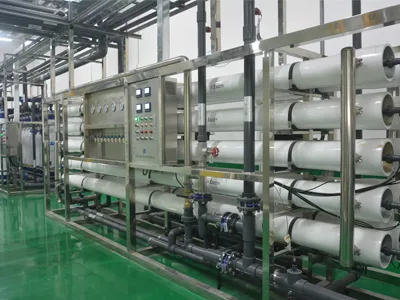
The pore size of a reverse osmosis membrane is approximately 10nm. Almost all inorganic ions are smaller than 10nm. Therefore, the reverse osmosis membrane utilizes the charge accumulation effect, removing inorganic ions whose ion clusters are much larger than 10nm. Polymers, organic matter with a diameter of 5000 Daltons, colloids, and bacteria are typically larger than 100nm and can be directly intercepted.
2. Why does a reverse osmosis membrane produce dirty water at the beginning of operation? How dirty is it, and how long does it take to stabilize at the normal desalination rate?
The desalination of a laboratory water purifier's reverse osmosis membrane is mainly based on charge action. Ions in the water initially move irregularly. When the reverse osmosis pressure exceeds the osmotic pressure, a large number of positive and negative charges accumulate and cannot penetrate the reverse osmosis membrane.
3. Under what conditions can a reverse osmosis membrane operate continuously or intermittently for a longer lifespan? The longer the reverse osmosis membrane operates continuously, the more stable the water quality and the greater the total water production.
4. How to determine if the diaphragm is clogged or the pump thrust is insufficient?
Block wastewater with your finger. If the pure water flow does not increase, the membrane is clogged; if it increases significantly, the pump thrust is insufficient.
5. Why do laboratory pure water systems require regular replacement of consumables?
Pretreatment filter cartridges become saturated with impurities, and the trapped dirt becomes a breeding ground for microorganisms, leading to biofouling, colloidal fouling, and even particulate matter clogging the semi-permeable membrane. Under the action of a high-pressure pump, part of the membrane is damaged, and wastewater directly enters the pure water system, causing widespread contamination of all water-passing parts. The gaps in the diaphragm itself also accumulate dirt due to impurities, which breeds bacteria. Therefore, reverse osmosis membranes should be replaced regularly. Although ion exchange resins can bring UP water to 18.25M, microorganisms can still grow, causing organic matter, bacteria, pyrogens, ammonia nitrogen, absorbance, particulate matter, and other non-ionic substances to exceed standards, thus affecting the value of blank ultrapure water. Therefore, regular replacement of consumables is essential to ensure trace ultrapure water.





