

Phone:
0086 28 87573647
+86 19150187139
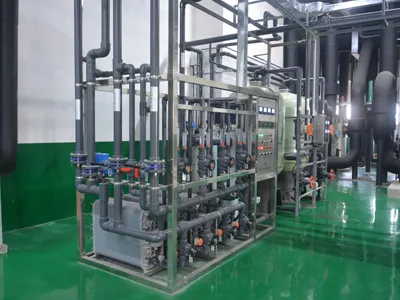
In ultrapure water systems, reverse osmosis is widely used. However, in the ultrafiltration process within reverse osmosis equipment, due to concentration polarization and membrane fouling, under the same operating pressure and temperature conditions, the permeate flux of the ultrafiltration membrane is significantly lower than the pure water flux. Therefore, it is necessary to control the main factors affecting the ultrafiltration process to improve filtration efficiency. These factors include:
1. Operating Pressure: Once a concentration-polarized gel layer forms on the ultrafiltration membrane surface, increasing the system operating pressure will not increase the permeate flux but will only increase the gel layer thickness and transmembrane resistance.
2. Operating Temperature: Temperature affects the viscosity of the feed solution.
3. Feed Flow Rate: The water flux of the membrane increases with increasing flow rate across the membrane surface.
4. Feed Pretreatment: The main targets of feed pretreatment are suspended solids, high molecular weight colloids, and pH value. Appropriate methods include chemical coagulation, filtration, and pH adjustment.
5. Operation time or operating cycle: After ultrafiltration has been running for a period of time, a gel layer gradually forms on the membrane surface. When the water flux drops to a certain level, the membrane needs to be cleaned. This period is one operating cycle.