





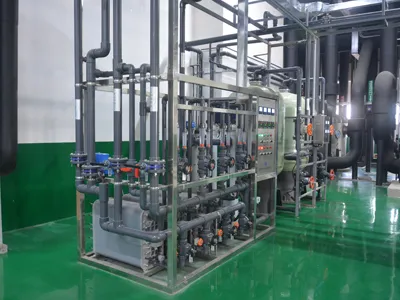
![[Science Popularization] Guide to Buying a Laboratory Ultrapure Water System](/uploads/image/20260604/science-popularization-guide-to-buying-a-laboratory-ultrapure-water-system.webp "[Science Popularization] Guide to Buying a Laboratory Ultrapure Water System")
Phone:
0086 28 87573647
+86 19150187139

As people's material lives improve, environmental pollution has become increasingly severe, especially water pollution. For the sake of human health, the concept of water purification arose. The most primitive water treatment method is sedimentation, which clarifies turbid water. However, this only removes visible large particles such as sediment, and is ineffective against invisible harmful bacteria. Disinfectants were then used to kill harmful bacteria, but this carries the risk of the killed bacteria transforming into carcinogenic organic compounds. To meet the needs of daily household life, water purifiers were developed.
The first generation of water purifiers was the household activated carbon water purifier. Its main function was to adsorb pollutants in the water through activated carbon. Its disadvantages were that it would become ineffective after prolonged use and had a very short effective period.
Then, the second generation of water purifiers, ultrafiltration membrane water purifiers, emerged. It can remove large molecules and molecular clusters, but cannot remove small molecules, bacteria, and metal ions.
Later, third-generation water treatment machines were developed, including mineral water treatment machines, reverse osmosis water treatment machines, and sterilization water treatment machines. Mineral water treatment machines add minerals to the water. While this method allows the human body to obtain the necessary minerals, excessively high mineral concentrations are not beneficial. Furthermore, not all added minerals are essential for the human body, and it cannot remove contaminants. Reverse osmosis water treatment machines remove all impurities from the water, regardless of their quality. Its advantage is that it retains some dissolved oxygen, but it also removes essential minerals. It requires an electric pump and uses imported membranes, making it expensive and unsuitable for the average consumer. Sterilization water treatment machines can use bleach or strong oxidants, such as ozone. They can kill bacteria in a fraction of a second and can retain water for up to a week, but after a week, they become ineffective, and the water returns to normal. Water that is contaminated and within its expiration date may be carcinogenic. Additionally, while ultraviolet (UV) sterilization has some effect, it can easily cause bacterial infections. Adding compounds that kill bacteria, such as IgA and Cu, can leave behind heavy metal ions that are carcinogenic. Therefore, the effectiveness of these water treatment machines is not ideal.
Nanofiltration membrane water treatment machines use nanofiltration membranes as the main component. Their structure is slightly looser, similar to reverse osmosis membranes. Nanofiltration membranes are charged membranes that can perform electro-adsorption, partially removing highly charged ions such as F ions. They have nano-sized pores, preventing large molecules from passing through, allowing some free water molecules to pass through, some NaCl to permeate, and even less calcium and magnesium ions to pass through. This combines the advantages of the above water treatment machines and avoids secondary pollution, establishing a healthy drinking water method.
Nanofiltration membrane drinking water treatment removes suspended solids and bacteria from water through flocculation, sedimentation, sand filtration, and chlorination, but has very low removal efficiency for various dissolved chemicals. With increasing water pollution and stricter drinking water standards in various countries, "deep drinking water treatment," which removes various organic substances and harmful chemicals, is receiving growing attention. Currently, the main deep treatment methods include activated carbon adsorption, ozone oxidation, and membrane separation. Microfiltration and ultrafiltration in membrane separation cannot remove salt and various low-molecular-weight substances, so they cannot be considered deep treatment when used alone. While reverse osmosis in membrane separation is considered deep treatment, the pure water it produces lacks the mineral nutrients found in natural drinking water, and long-term consumption is harmful. Furthermore, reverse osmosis water dispensers are expensive, and operating costs are also high due to the use of pumps. Nanofiltration membranes, due to their inherent characteristics, are highly suitable for drinking water applications.
Nanofiltration membranes can soften and moderately desalinate tap water under low pressure (compared to reverse osmosis), and can also remove various organic and inorganic substances (especially carcinogens), microorganisms, and dissolved organic matter. They can be considered "versatile" and are therefore increasingly favored.
The role of nanofiltration membranes in drinking water preparation.
(1) For tap water sourced from surface water, nanofiltration can remove impurities, color, odor, chloroform precursors (a byproduct of chlorination disinfection, a carcinogen), pesticides, fertilizers, and total organic carbon.
(2) For tap water sourced from groundwater, nanofiltration can remove hardness components, sulfides, sulfates, nitrates, fluorides, borides, arsenides, and other harmful substances.
(3) For advanced tap water treatment, nanofiltration can remove salt, bacteria, viruses, and pyrogens.
Main Applications of Bonnie Brand Nanofiltration Membrane Household Water Dispensers
(1) Saltwater Desalination: Tap water in coastal areas often has a salty taste. For example, this is the case in Nanhui District, Shanghai. Its salt content is not high, about several hundred to 2,000 mg/L, but frequent consumption of this water can easily lead to high blood pressure and coronary heart disease. This water also makes tea tasteless and cooking bland. Advanced treatment is necessary. (2) Well Water Hardening: In many areas, tap water is sourced from deep wells, resulting in high water hardness. When boiling water, white or gray scale or sediment often forms on the surface and bottom of the kettle. Regular consumption of this water increases the risk of heart disease, cerebrovascular disease, and kidney stones. Good tea loses its flavor, becoming bland and bitter. Sometimes, well water also contains toxic metals such as mercury, cadmium, and arsenic, which cannot be eliminated by existing water treatment processes, requiring advanced treatment.
(3) Microbial Removal: River water contains many pathogens and Cryptococcus spores, which chlorine disinfection cannot completely kill. In the United States, an incident caused 400,000 people to contract dysentery, prompting the adoption of membrane filtration technology. In rural areas and small-town water plants in my country, lax management often leads to contaminated effluent, necessitating advanced treatment.
(4) Water Quality Improvement: Water sources for tap water plants in my country are often polluted by industrial wastewater, domestic sewage, and pesticides and fertilizers, resulting in inconsistent effluent quality and requiring advanced treatment. All of the above can be improved by using a nanofiltration membrane water dispenser for deep treatment, which can improve water quality, enhance quality of life, and safeguard people's health.





